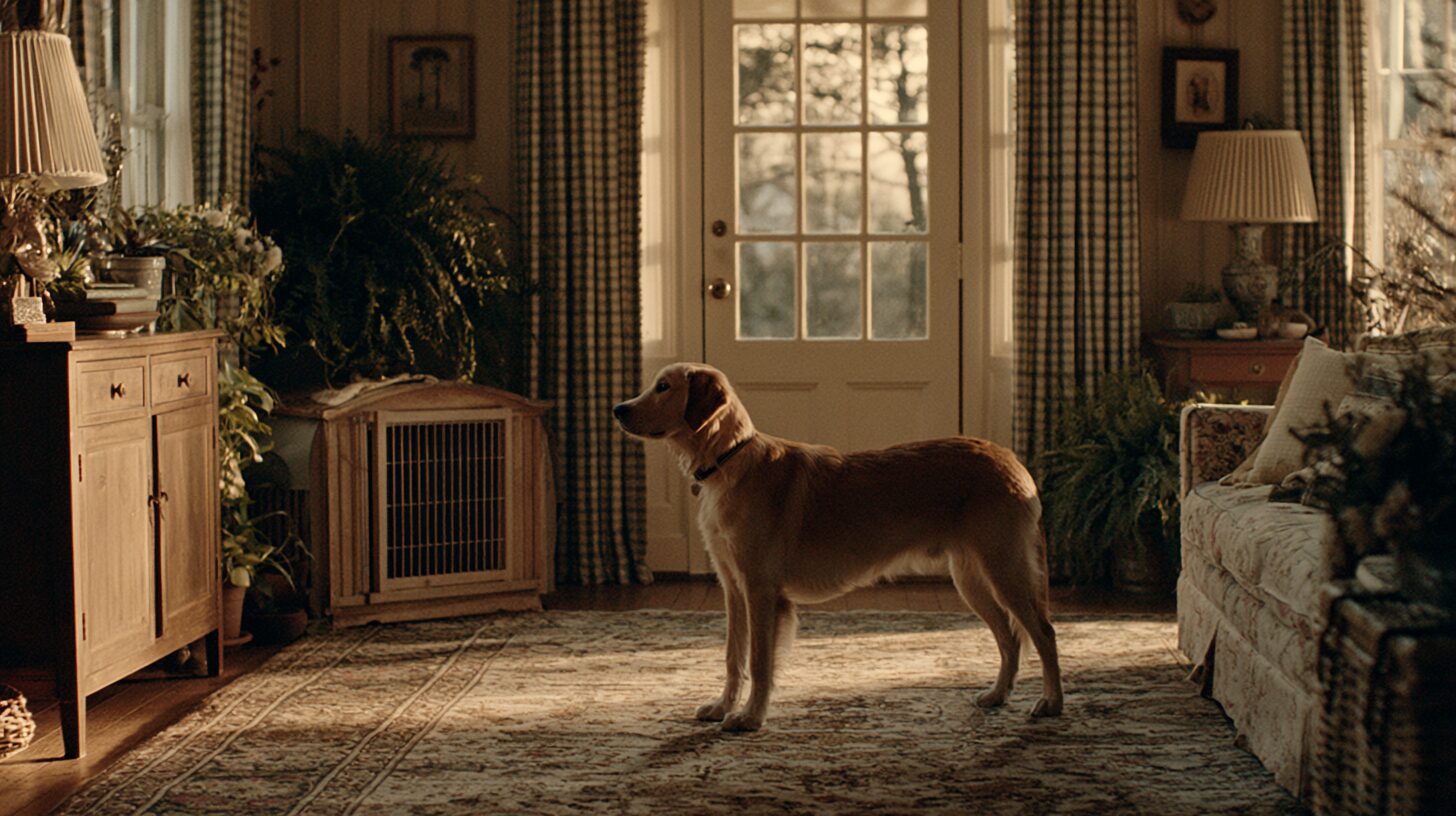
Crate training advice is overwhelmingly written for puppies. Adult dogs are a different problem. Some come from situations where a crate meant punishment or abandonment; others have simply never been crated and don’t see why a metal box is supposed to be calming. Skipping ahead with the puppy-pace plan tends to backfire — the door slams shut, the dog panics, and now there’s a real fear association to undo. The 5-day plan below moves at the speed of an adult dog, with explicit checkpoints for whether to advance or hold. It draws on the AKC’s positive-reinforcement framework and adds adjustments specifically for rescue dogs and dogs with prior bad crate experiences. Crate training fails more often from impatience than from any other cause; this plan is designed to be slow.
Why adult dogs are different
The short answer: adult dogs come with prior associations. A puppy meets the crate as a novel object. An adult may have spent shelter time in a kennel, ridden in an airline crate during transport, or been crated as punishment by a previous owner. Those memories load every step of training. The first job is to figure out what the crate currently means to the dog before you try to change what it means.
The AKC’s step-by-step crate training guide opens with the same point: the most important step is making the crate a positive experience, and forcing a dog into it creates a negative association that can take much longer to undo than to prevent. Their broader piece on the benefits of crate training emphasizes that it can take up to six months of consistent training for some dogs — that’s the realistic ceiling, not a failure case.
Before you start: pick the right crate
The short answer: the crate should be just big enough for the dog to stand up without ducking, turn around in a single motion, and lie flat on their side. Bigger isn’t better — too much space makes the crate feel like a kennel rather than a den, and undermines the bladder-control side benefit. Wire crates with a removable tray and a slide-out divider are the most flexible; plastic airline crates work for travel and feel more den-like for some dogs.
Sizing rules for an adult dog:
- Measure the dog from nose to base of tail (length) and from floor to top of head while standing (height).
- Add 2-4 inches to each measurement; that’s your interior crate dimension.
- For a 30-lb mixed breed, a 30-inch wire crate is typical; for a 60-lb Lab, 36-42 inches; for a 90-lb Shepherd, 42-48 inches.
- Look for a flat, fitted crate pad (not a fluffy dog bed initially — they get chewed) and a single safe chew item for the inside.
The 5-day soft plan
The short answer: Day 1 introduces the crate as furniture, with the door open and removed if possible. Day 2 adds meals near and then inside. Day 3 introduces brief door-closed moments while you’re present. Day 4 expands those windows. Day 5 begins very short alone-time sessions. Each day has explicit “advance” and “hold” criteria so you don’t push past where the dog is comfortable.
Day 1 — Introducing the crate as furniture
Set the crate up in a frequently used room — living room, kitchen — with the door tied open or removed entirely. Throw two or three high-value treats just inside the entrance. No instructions, no luring, no commands. Let the dog investigate when they choose.
- Advance criterion: the dog walks in voluntarily to take treats at least three times during the day.
- Hold criterion: the dog won’t enter at all by end of day. Stay on Day 1 until they will. For a fearful or trauma-history rescue, this can take 3-5 days on its own — that’s normal, not failure.
Day 2 — Meals near and inside
Place the food bowl right at the crate entrance. After two meals, move it just inside. After two more, move it to the back. Door stays open. The dog walks in, eats, walks out at their pace.
- Advance criterion: the dog enters voluntarily, eats relaxed (not snatching), and exits calmly.
- Hold criterion: the dog won’t enter when the bowl is at the back. Move it back to the entrance, hold there for 1-2 more days.
Day 3 — Door closed briefly while you’re present
Feed a meal in the crate. While the dog is eating, gently push the door partly closed (not latched) for 5 seconds, then open. Repeat with the door fully closed but unlatched for 10-20 seconds while you stay in sight. Open before the dog finishes eating.
- Advance criterion: the dog continues eating without pausing, looking up, or whining when the door is closed.
- Hold criterion: the dog stops eating, looks anxious, paws at the door, or vocalizes. Open immediately, drop back to door-partly-closed, hold another day.
Day 4 — Expanding the closed-door window
Build up to 5 minutes of door-closed time while you’re in the same room. Use a stuffed Kong with frozen wet food, a long-lasting safe chew, or a snuffle mat inside the crate to give the dog something to focus on. Sit nearby reading or working — calm presence, not direct attention.
- Advance criterion: 5 minutes of relaxed in-crate time, eyes soft, body settled.
- Hold criterion: the dog whines, scratches, or fixates on the door. Drop back to shorter intervals; check whether the chew item is engaging enough.
Day 5 — Brief alone time
Crate the dog with a Kong, leave the room for 1 minute, return. No greeting on return — neutral entry. Build to 2 minutes, then 5, then 10 across the day. Stay in the house the whole time.
- Advance criterion: the dog is calm at 10 minutes alone, doesn’t escalate when you leave.
- Hold criterion: any escalation — whining, barking, scratching — drop back to shorter, more present sessions and add another day or two before extending.
What to do when the plan stalls
The short answer: stalls are usually environmental (location, noise, crate type) or motivational (reward isn’t valuable enough) before they’re temperamental. Diagnose before changing the crate or the dog. Most “won’t enter the crate” problems resolve once the food and the surroundings are right.
Common derailers and the fixes:
- Crate is in a high-traffic, noisy room. Move it. Quieter spot, near a wall, with at least one side closed off (back of couch, corner) feels denlike.
- Reward is too low-value. Switch from kibble to boiled chicken or freeze-dried liver. The food has to be worth it.
- Crate is too big and feels open. Drape a blanket over the top and back to make it feel enclosed (but watch for chewing).
- Dog has a prior crate trauma. Throw away the wire crate and try a soft-sided crate, an open-top exercise pen, or a dedicated room behind a baby gate. Sometimes the answer isn’t the crate; it’s a confined space without the visual associations.
- Dog is anxious independent of the crate. If the dog also struggles when alone in the house with no crate, you’re dealing with separation anxiety, not crate aversion. Read our separation anxiety guide; the workup is different.
What never to do
The short answer: never use the crate as punishment, never crate a dog who is panicking (you’ll worsen the panic), never crate beyond the dog’s bladder capacity, and never leave a dog crated in a hot car or a heated room without ventilation. Each of these turns crate training into a problem rather than a tool.
- Punishment use. Sending the dog to the crate after a behavioral incident makes the crate aversive forever. Use a calm timeout in a different neutral location instead.
- Crating a panicking dog. A dog who panics in a crate (drooling, paw-bloodying, escape attempts) has a confinement phobia or separation panic. Confining harder makes it worse. The right response is a behavior consult, often with medication on the table.
- Long-duration crating without exercise. Adult dogs should not be crated more than 4-6 hours during the day, and many shouldn’t be crated for half that. (Our bladder-hold guide covers the related question of how long is reasonable for different ages and conditions.)
- Crate in heat. Cars left in the sun reach lethal temperatures within minutes. Indoor heated rooms with no airflow can also be dangerous for a confined dog.
Realistic timelines
The short answer: the 5-day plan is the floor for confident adult dogs with no crate trauma. Two to four weeks is realistic for the average rescue. Three to six months is realistic for dogs with prior bad crate experiences. Treat the dog you have, not the timeline you wish you had.
Specifics by dog profile:
- Confident adult, no crate history: 5-10 days to reliable short-stay. 2-3 weeks to comfortable longer durations.
- Adopted shelter dog, neutral crate history: 2-4 weeks. The shelter kennel may have already created a partial association — sometimes positive, sometimes not.
- Rescue with documented or suspected crate trauma: 2-6 months. Consider switching to a confined-room/baby-gate setup as a permanent answer rather than forcing crate use.
- Dog with separation anxiety: crate training is not the right project. Anxiety treatment first, crate evaluation later (and often the answer is no crate).
Frequently asked questions
How long can I leave my crate-trained adult dog crated?
Up to about 4-6 hours during the day for a well-trained adult dog with appropriate exercise before and after. Overnight 7-9 hours is reasonable for most adults because urine output drops during sleep. Daytime stretches longer than 6 hours should include a midday walker.
What if my adult dog cries the entire first night?
Don’t open the door for the cry — that teaches the cry as the trigger. Wait for a brief pause, even 2-3 seconds, then open and quietly take the dog out for a bathroom break, then return them to the crate. Gradually extend the pause-before-opening over nights. If crying lasts more than 30-45 minutes nightly for several nights, you’re past the dog’s threshold; drop back to Day 4 of the daytime plan.
Should I crate my dog when I’m home?
Yes, occasionally — short, voluntary, treat-rewarded sessions while you’re home prevent the crate from becoming associated only with departures. That association is what produces departure anxiety in many dogs.
Is a crate cruel for an adult dog?
Crate training, done well, isn’t cruel. Crate misuse — punishment use, excessive duration, no exercise, ignoring distress — is. The training process described above is well-aligned with the AKC’s and ASPCA’s published positive-reinforcement frameworks. (For broader training principles, see our dog training fundamentals.)
What about a crate-free alternative?
For dogs who don’t crate-train well after several months, an exercise pen, a baby-gated room, or a dog-safe utility room often works as well as a crate for confinement during work hours. The same housetraining and chew-management goals can be met without forcing crate acceptance on a dog who’s never going to be comfortable.
My dog used to be fine in a crate and now isn’t — what changed?
Possible: a one-off bad experience (loud noise, panic episode, illness while crated), an increase in separation anxiety, or simple aging. Investigate which by changing one variable at a time. Often a vet visit to rule out pain (older dogs) or a behavior consult clarifies it.
Related reading on Paw Wisdom: Dog training fundamentals · Separation anxiety solutions · How long can a dog hold its bladder · Dog anxiety overview