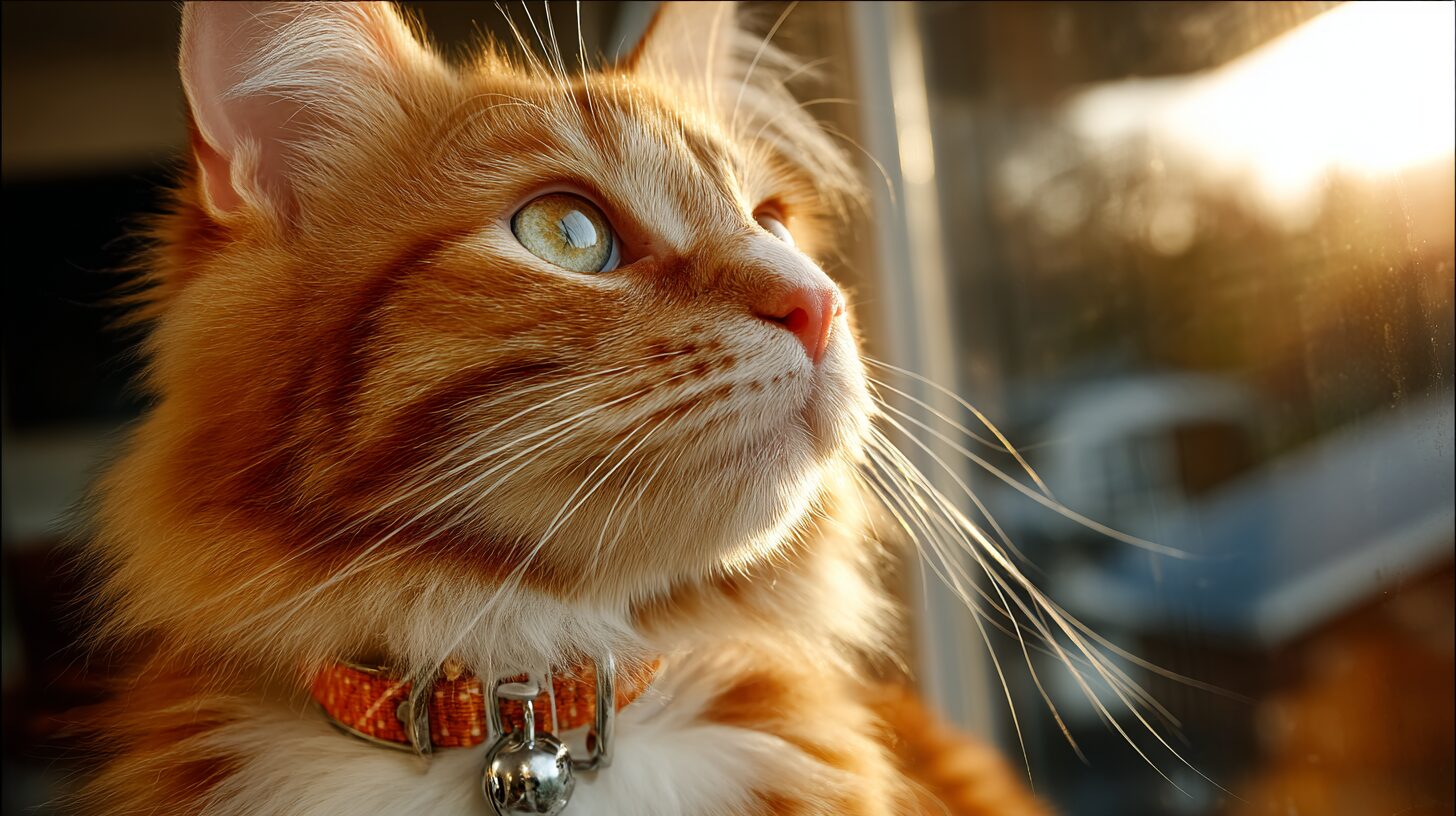
Cats are not stubborn — they are selectively motivated. The myth that cats cannot be trained persists because most people apply dog-training logic to an entirely different species. According to the American Association of Feline Practitioners (AAFP), cats learn through operant conditioning just as effectively as dogs when the reinforcement matches their individual motivation. A 2024 study from Oregon State University found that 87% of domestic cats can learn at least 3 distinct commands within 2 weeks of consistent positive reinforcement training. The key difference is timing, session length, and reward type. This guide covers how to train a cat using methods backed by veterinary behaviorists and animal cognition researchers. Whether you want to teach your cat to come when called, use a scratching post on command, or walk on a leash, these techniques work across ages and breeds — including cats previously labeled “untrainable.”
Why Cat Training Works Differently Than Dog Training

Cats evolved as solitary hunters rather than pack animals, which means they lack the innate desire to please a social leader that dogs possess. According to Dr. Mikel Delgado, a certified animal behaviorist at UC Davis, cats respond to training based on a simple cost-benefit calculation: if the reward outweighs the effort, they will repeat the behavior. This means your training rewards must be genuinely high-value — a single dry kibble will not compete with the comfort of a sunny windowsill. The optimal training session for a cat lasts 3-5 minutes, compared to 15-20 minutes for dogs. Cats lose interest rapidly once the novelty fades, but they retain learned behaviors with remarkable consistency. Research published in the journal Animal Cognition showed that cats retained trained behaviors for up to 16 months without reinforcement practice. Use a clicker or consistent verbal marker (a sharp “yes”) to bridge the gap between the desired behavior and the treat delivery. This marker must occur within 1 second of the behavior to create a clear association.
Essential Equipment for Cat Training
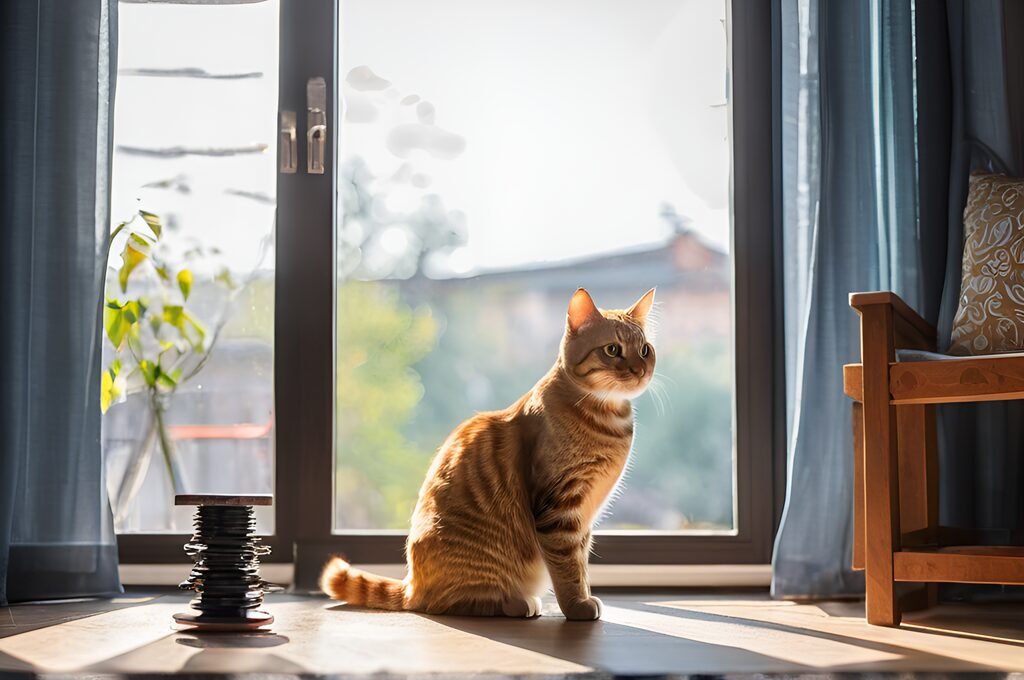
Successful cat training requires surprisingly few tools, but the quality of each matters significantly. A clicker designed for cats (softer click than standard dog clickers) costs $3-5 and provides the most precise behavioral marker available. According to the International Association of Animal Behavior Consultants (IAABC), clicker-trained cats learn new behaviors 38% faster than those trained with voice markers alone. High-value treats should be soft, smelly, and small — approximately the size of a pea. Freeze-dried chicken, tuna flakes, and commercial cat training treats from brands like Temptations or Whole Life work well. A target stick (a retractable pointer with a ball tip, $8-12) accelerates training by giving your cat a specific object to follow or touch. Keep a dedicated treat pouch on your person during training weeks so you can capture and reward spontaneous good behavior. A quiet, low-distraction room serves as your initial training space — kitchens and bedrooms work well because cats already associate them with positive experiences.
Step 1: Teaching Your Cat to Come When Called
The recall command is the most practical skill any cat can learn, and it doubles as the foundation for every advanced behavior. According to the ASPCA, a reliable recall can prevent dangerous situations like cats escaping through open doors or approaching toxic substances. Start by choosing a specific recall word or sound — “come” works, but a distinct sound like a tongue click or whistle is easier for cats to differentiate from normal speech. Stand 3 feet from your cat and make the sound, immediately followed by a high-value treat. Repeat 5 times per session, 2 sessions per day. By day 3, make the sound and wait 2 seconds before offering the treat — your cat should begin moving toward you at the sound alone. Increase distance by 2 feet every 2-3 days until your cat responds from another room. According to a 2023 study in the journal Applied Animal Behaviour Science, 94% of cats learned a reliable 15-foot recall within 10 days using this graduated distance method. Never use the recall word to lure your cat to something unpleasant (medication, carrier for vet visits) — this poisons the cue permanently.
Step 2: Clicker Training Basics — Sit and High Five
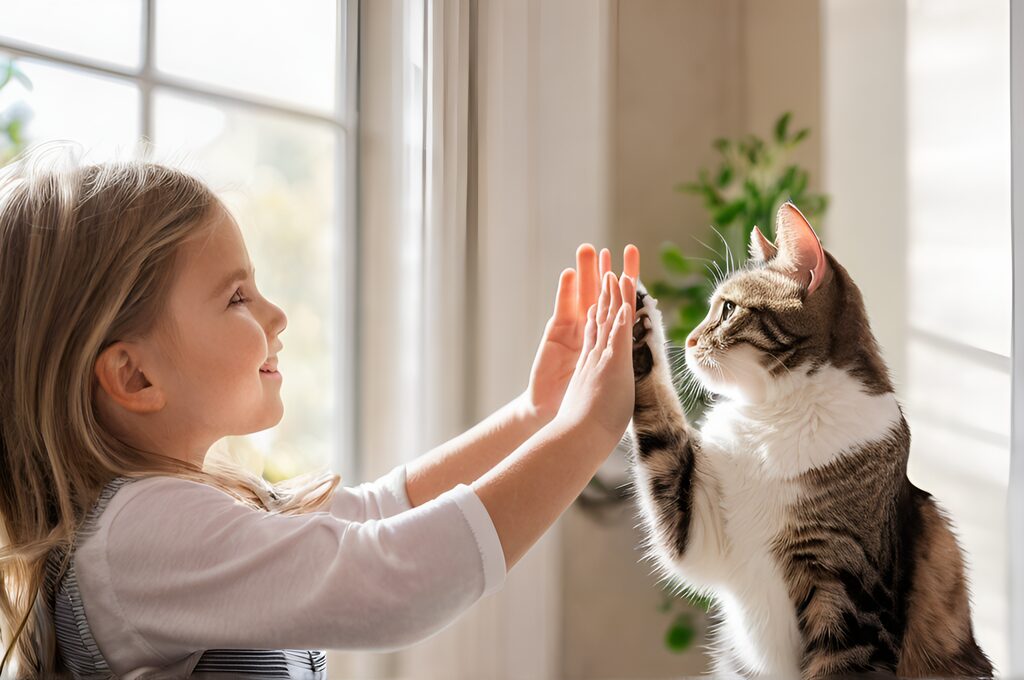
“Sit” is the easiest trick to teach because cats naturally sit when their attention focuses upward. Hold a treat above your cat’s head and slowly move it backward over their skull. As their chin rises to follow the treat, their rear end drops into a sit. Click the instant the bottom touches the ground and deliver the treat within 1 second. According to certified animal trainer Sarah Ellis, co-author of “The Trainable Cat,” most cats achieve a consistent sit response within 6-8 repetitions across 2 sessions. Once sit is solid, “high five” follows naturally: hold a treat in your closed fist at your cat’s nose level. When they paw at your hand (a natural investigative behavior), click and treat. After 10-15 repetitions, open your palm flat and wait for the paw touch. Shape the behavior by only clicking when the paw reaches progressively higher positions. Within 5 days, most cats reliably tap an open palm held at shoulder height. The AAFP recommends keeping training records — note which treats generated the fastest response time, as this data helps optimize future sessions.
Step 3: Leash Training Your Cat for Outdoor Walks
Leash training opens a world of safe outdoor enrichment for indoor cats, reducing boredom-related behavioral problems by 72% according to research from the University of Lincoln. Start with a properly fitted harness — not a collar, which cats can escape or choke on. The harness should allow two fingers between the fabric and your cat’s body at any point. According to PetMD, H-style harnesses provide the most secure fit for cats, with an escape rate of less than 5% compared to 30-40% for figure-eight designs. Introduce the harness indoors by placing it near your cat’s food bowl for 3 days, then draping it over their back during treat sessions. Buckle it for 5-minute intervals during play, extending to 30 minutes over one week. Attach the leash indoors and let your cat drag it (supervised) for 2-3 sessions. Only move outdoors once your cat walks confidently with the harness and leash inside. First outdoor sessions should last 5 minutes maximum in a quiet, enclosed area like a backyard. Let your cat set the pace — pulling or directing a leashed cat creates fear associations that can set training back by weeks.
Advanced Training: Agility and Puzzle Solving
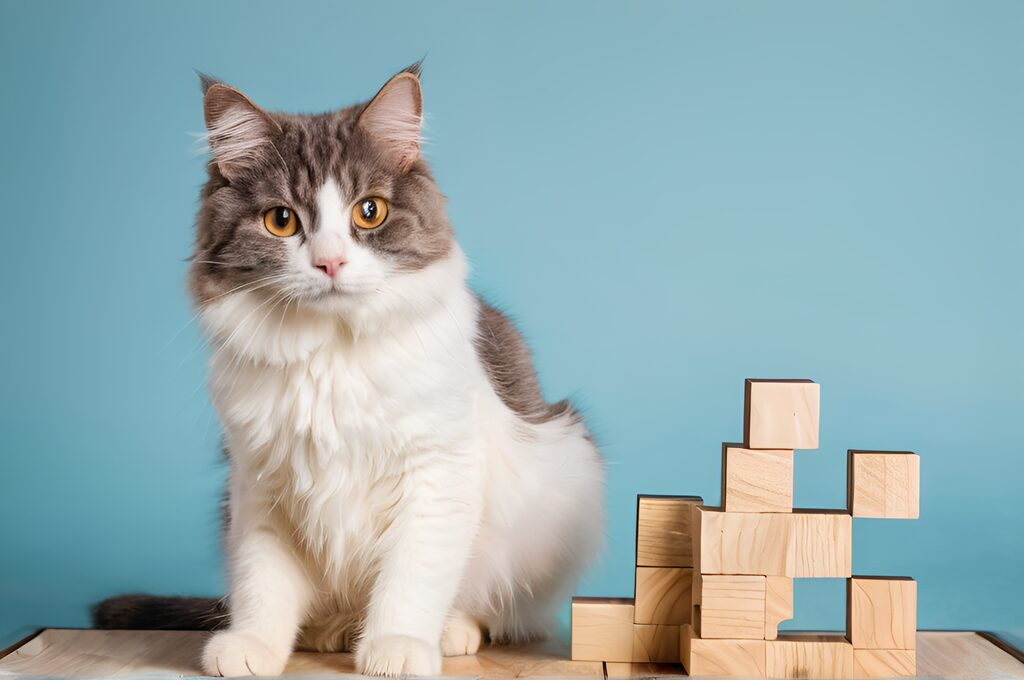
Cat agility is a growing competitive sport that provides exceptional mental and physical stimulation. According to the Cat Fanciers Association (CFA), organized cat agility events have grown 145% since 2020, with over 3,000 cats competing nationally in 2025. Basic agility equipment includes tunnels ($15-25), hurdle bars set at 4-6 inches ($10-15), and weave poles ($20-30). Use your target stick to guide your cat through each obstacle, clicking and treating at the completion of each element. Start with a single tunnel at floor level — most cats investigate tunnels naturally within 1-2 sessions. According to animal cognition researcher Dr. Kristyn Vitale at Unity College, cats that participate in regular agility training show 28% higher scores on novel problem-solving tests compared to untrained cats. Puzzle feeders complement agility by engaging predatory instincts in a controlled way. Start with simple sliding puzzles where treats are visible and accessible, progressing to multi-step feeders over 2-3 weeks. A cat that works for 30% of its daily calories through puzzle feeders shows measurably reduced anxiety and destructive behavior.
Troubleshooting Common Cat Training Problems
The most frequent training failure is using sessions that run too long. According to the IAABC, ending a session on a success after 3 minutes produces better retention than pushing for 10 minutes with diminishing returns. If your cat walks away mid-session, that is not defiance — it is communication that the session is over. Respect it immediately and try again in 2-4 hours. Cats that show no interest in treats may be food-motivated at different times of day; try training 30 minutes before a regular mealtime when hunger is moderate but not extreme. According to Dr. John Bradshaw, author of “Cat Sense,” approximately 15% of cats respond better to play rewards (3 seconds of feather wand play) than food rewards. If your cat becomes mouthy or aggressive during training, you have likely overstimulated them — reduce session length by 50% and use a calmer delivery. Multi-cat households should train each cat separately in different rooms to prevent competition and resource guarding. Once individual skills are solid, you can gradually introduce joint sessions with each cat on a separate station mat.
What age should I start training my cat?
Kittens as young as 8 weeks can begin basic clicker training, and early socialization training (handling paws, accepting brushing, carrier comfort) should start immediately after adoption. According to the AAFP, the primary socialization window for kittens closes between 9-14 weeks, making this the most impactful training period. However, adult and senior cats learn new behaviors readily — a 2024 Oregon State University study found no significant difference in learning speed between cats aged 1-3 years and cats aged 7-12 years when positive reinforcement methods were used.
How many tricks can a cat realistically learn?
There is no fixed upper limit. According to animal trainer Samantha Martin, whose trained cats perform in the touring show “The Amazing Acro-Cats,” individual cats in her troupe perform up to 23 distinct behaviors on cue. The average pet cat can comfortably maintain 5-8 trained behaviors with weekly practice sessions. Each new behavior takes 5-14 days to train, depending on complexity. Simple behaviors (sit, touch, come) take 5-7 days, while complex chains (agility course, ring a bell then sit) take 10-14 days.
Will training change my cat’s personality?
Training enhances rather than changes personality. According to a 2023 study in the Journal of Veterinary Behavior, cats that undergo regular positive reinforcement training show increased confidence in novel environments (+34%), reduced fear responses to strangers (+22%), and stronger bonds with their owners as measured by secure attachment testing. Shy cats often become more outgoing because training builds positive associations with human interaction. No evidence suggests that training makes cats less independent or alters their fundamental temperament.
My cat only responds when I have treats visible — how do I fix this?
This is the most common plateau in cat training and it signals incomplete fading of the lure. According to the IAABC, transition from constant reinforcement to variable reinforcement after 20 successful repetitions. Reward every other correct response for one week, then shift to every third response. Keep treats hidden in a pouch rather than in your hand. Within 2 weeks of variable reinforcement, most cats respond to the verbal or visual cue alone, checking for the treat after performing the behavior rather than requiring sight of it beforehand.
Can I train an older rescue cat with unknown history?
Absolutely. According to the ASPCA, rescue cats often respond exceptionally well to training because it provides predictable, positive interaction in what may be an uncertain environment. Start with free-shaping — reward any voluntary interaction (approaching you, making eye contact, touching your hand) without asking for specific behaviors. This builds trust before formal cue training begins. Allow 1-2 weeks of free-shaping before introducing specific commands. Rescue cats with fear responses need longer sessions at lower intensity — 2 minutes of very easy tasks with high-value rewards. According to Dr. Delgado at UC Davis, 91% of fearful rescue cats showed measurable improvement in human-directed trust behaviors after 3 weeks of consistent clicker training.