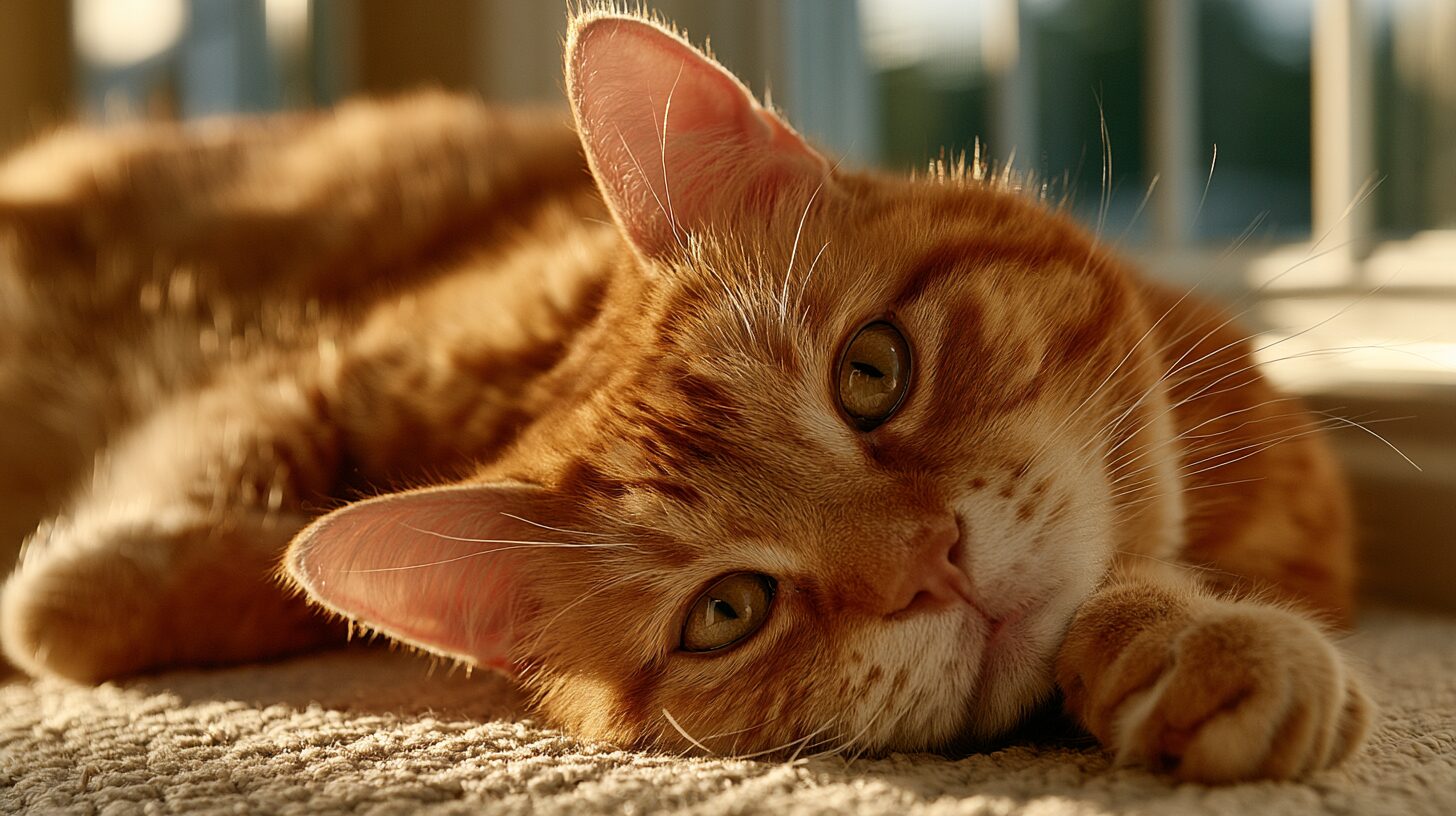
Cats are masters of hiding pain. The instinct comes from being small predators that are also prey — showing weakness in the wild attracts trouble, so a cat in real distress will often act almost normally. That’s the bad news. The good news is that researchers at the University of Montreal and the AAHA Pain Management working group have spent the last decade building validated, owner-usable tools to read pain in cats. The Feline Grimace Scale and the AAHA chronic-pain home checklist together replace a lot of guesswork. This guide walks through what each tool actually looks for, the behavioral signs that point to pain when the face isn’t a clear read, and a practical triage rule for “go to the vet now” versus “watch for 24 hours” — written for owners, not vet techs.
The Feline Grimace Scale: a 60-second face read for acute pain
The short answer: the Feline Grimace Scale (FGS) reads pain from five facial action units — ear position, eye tightening, muzzle tension, whisker position, and head position — each scored 0, 1, or 2. A total score of 4 or higher out of 10 means the cat is in enough pain that an analgesic is warranted. It takes under a minute and was validated against client-owned cats in real clinics, not just lab animals.
The scale was developed by Dr. Paulo Steagall’s group at the University of Montreal and made freely available to owners and vets at the official Feline Grimace Scale site, which includes a self-test you can practice on. An AVMA news write-up covers how the original validation study compared 31 cats in pain (admitted to the urgency service) against 20 healthy controls and showed the scale’s score dropped reliably after pain medication.
The five facial action units, in plain English
- Ears. Forward and upright = 0. Slightly pulled apart or sideways = 1. Flattened and rotated outward (the “airplane ear” look) = 2.
- Eyes (orbital tightening). Wide open and round = 0. Partially closed = 1. Squinted into a slit = 2.
- Muzzle. Round and relaxed = 0. Mildly tense = 1. Tight elliptical shape that pulls the lips inward = 2.
- Whiskers. Loose, curved, splayed = 0. Slightly straighter = 1. Pulled forward and rigid = 2.
- Head position. Above shoulder line = 0. Level with shoulders = 1. Below shoulders or tilted = 2.
Add the scores. Anything 4 or above is the threshold for “this cat needs an analgesic now,” and that’s a same-day vet call. The scale was designed for acute pain — the kind that follows surgery, an abscess, a urinary blockage, or trauma — not chronic arthritis, where facial signs are less reliable.
Why facial scoring isn’t enough on its own
The short answer: chronic pain in cats — from osteoarthritis, dental disease, kidney disease — develops over months and rarely shows on the face at any single moment. Behavioral changes at home are how chronic pain announces itself, and they’re best detected by you, not at the clinic.
The 2022 AAHA Pain Management Guidelines are explicit on this point: for cats, many of the important behavioral signs of chronic pain are most detectable in the home, so detection is more effective with owner input. A cat sitting on a vet’s exam table is in fight-or-flight mode and will mask everything they can. The behavioral signs below are what to watch for between appointments.
Nine behavioral signs that often mean pain
The short answer: hiding more than usual, missing jumps, grooming changes (over-grooming a single spot, or letting the coat go matted), litter box avoidance, appetite drop, less interaction, change in vocalization, flinching at touch, and aggression that wasn’t there before are the nine biggest behavioral pain flags veterinarians look for. Two or more of them together — especially if they’re new — means a vet visit, not “wait it out.”
1. Increased hiding
A cat who used to nap on the back of the couch and now spends most of the day under the bed is not just being moody. Withdrawal is one of the earliest, most reliable behavioral signs of pain in cats according to AAHA’s owner-facing pain primer. The bigger the gap from baseline, the more weight it carries.
2. Litter box avoidance
Two flavors here. A cat who’s painful in the spine or hips can struggle to climb in or “assume the position” in a high-sided box, especially with arthritis or after a fall — which means urine outside the box that owners often misread as a behavioral protest. The other flavor: stranguria from a urinary blockage or cystitis. A male cat straining over the litter box repeatedly with little or no output is an emergency, not a behavior issue. Same-day vet, no exceptions.
3. Grooming changes (in either direction)
Over-grooming a specific spot — typically a flank, a hip, or the lower abdomen — usually means localized pain or skin disease underneath. Under-grooming is the opposite signal: a coat that’s gone matted, dandruffy, or greasy across the back and rear suggests the cat can’t bend comfortably to reach it. Senior cats with arthritis often stop grooming the lumbar area first.
4. Subtle gait changes
The classic “limp” is rare in cats — they distribute weight elegantly even with bad hips. What you’ll see instead is reluctance to jump, jumping but missing the landing on a surface they used to nail, jumping up but not down (or vice versa), and slower transitions between sitting and standing. Time how long it takes them to settle from a standing position. A change of more than a couple of seconds across weeks is worth noting.
5. Appetite drop
Cats are notoriously food-motivated when healthy. A cat who skips one meal can be having a bad day; a cat who skips meals across two days, especially an overweight cat, is a medical concern — feline hepatic lipidosis can develop in as little as 48-72 hours of fasting in heavier cats and is itself life-threatening.
6. Vocalization shifts
This goes both ways. A normally quiet cat who starts howling at night may be in pain (or cognitively declining, which has its own pain overlap in seniors). A normally chatty cat who’s gone silent and stopped greeting you at the door is also signalling. The change matters more than the absolute volume.
7. Less interaction with people and other pets
A cat who used to head-butt you for chin scratches and now flattens and walks off — or a cat who used to sleep curled with the household dog and now hisses when the dog approaches — is telling you something. Pain shrinks tolerance.
8. Flinching, freezing, or biting at a specific touch
Run a slow, light hand from the back of the head down to the base of the tail and along each flank. A cat in normal health will arch into the touch or roll. A painful cat will skin-twitch suddenly at one spot, freeze, or in extreme cases turn and bite — which gets misread as “she’s gotten mean.” It’s almost always pain. (For a deeper look at the behavior-aggression-pain link, see our guide to sudden aggression in cats.)
9. Purring that isn’t relaxed
Cats purr when content, but they also purr to self-soothe under stress and pain. The tell is context: a cat curled up, eyes half-closed, kneading? Probably content. A cat purring while hunched, tense-muzzled, breathing fast, or hiding? That’s a self-comfort purr and it should not be reassuring.
Common pain sources to think about, by life stage
The short answer: in young cats, urinary issues, oral injuries, and abscesses are the leading acute pain causes. In adult cats, dental disease and bite-wound abscesses dominate. In cats over 10, dental disease and degenerative joint disease (DJD/osteoarthritis) are the leading causes of chronic pain — and DJD is wildly under-diagnosed because cats don’t limp the way dogs do.
A 2-year-old neutered male cat straining and vocalizing in the box for 12 hours is almost certainly a urinary obstruction (a true emergency). A 14-year-old cat who has stopped jumping onto the bed over the last six months is almost certainly arthritic (a chronic-pain workup, not an emergency, but still a vet visit). A 7-year-old cat suddenly drooling with bad breath probably has a fractured tooth or resorptive lesion — covered in our cat dental care guide. Knowing what’s typical for your cat’s age makes the rest of the read easier.
How to triage at home: same-day vet vs. monitor 24 hours
The short answer: any single emergency sign — labored breathing, pale gums, straining to urinate with little output, head tilt with inability to walk straight, a Feline Grimace Scale score of 4 or above, or a wound with active bleeding — is a same-day call. Two or more behavioral signs without an emergency sign is a “next-business-day” appointment. A single new behavioral sign in a normally healthy cat can usually be watched for 24 hours, with re-evaluation at the 24-hour mark.
Same-day vet, no exceptions
- Open-mouth breathing or rapid shallow breathing
- Pale, white, or blue gums (press a finger on the gum and time refill — over 2 seconds is bad)
- A male cat repeatedly straining in the litter box with little or no urine
- Sudden head tilt, ataxia (drunken walking), or seizure
- Bleeding wound, eye injury, or visible swelling that wasn’t there yesterday
- Feline Grimace Scale total score of 4+
- Repeated vomiting (more than three episodes in a few hours), especially with a string or thread visible
Within 24-72 hours
- Two or more behavioral pain signs without an emergency sign
- New aggression at touch in a previously friendly cat
- Skipped meals across two days
- Persistent over-grooming a single spot
- Visible matting or coat decline in a normally tidy senior cat
Watch and document
- One new sign in a single day with no other changes — keep a short note (time, what you saw, a phone photo if relevant) and re-check at 24 hours
- Mild, transient changes after a known event (vaccination, dental cleaning, travel)
Veterinary visits aren’t free — a sick-visit exam plus basic bloodwork in a U.S. urban practice typically runs $180-$320 in 2026, and add radiographs and you’re at $400-$600 — which is why our guide to pet insurance for cats works through whether a policy makes sense for your situation. The cost is real, but waiting on a urinary blockage or a foreign body costs an order of magnitude more, and often a cat.
What to record before the visit
The short answer: a 30-second phone video of the behavior change is worth more than any verbal description, especially for gait or vocalization. Bring it. Bring a list of what changed, when, and how often. Bring a current weight if you can.
Specifics that help a vet narrow the differential:
- Date the change started (or “first noticed”). Yesterday vs. three weeks ago changes the workup.
- What’s worse and what’s unchanged. “Stopped jumping but still eating normally” steers different than “stopped eating and stopped jumping.”
- Litter box use: frequency, posture, presence of straining, urine color and clumping, stool consistency.
- Any environmental changes: new pet, moved house, change of food, new person in the home — these matter for ruling stress in or out.
- A short video. Cats hide pain at the clinic; your phone is the only place a vet can see real behavior.
Frequently asked questions
Can I give my cat a human painkiller while waiting for the vet?
No. Acetaminophen (Tylenol) is fatally toxic to cats — they lack the liver enzyme to detoxify it — and ibuprofen and naproxen damage the kidneys and gut at human doses. The only safe answer is to call the vet for a prescription analgesic, typically a NSAID (robenacoxib, meloxicam) or, for sharper pain, a short opioid course like buprenorphine.
Is my cat purring because she feels better, or is she purring through pain?
Either is possible. Look at the rest of the body: relaxed muzzle, half-closed eyes, kneading paws, soft posture all point to a content purr. Tense muzzle, hunched posture, fast breathing, eyes squinted point to a self-soothing purr — which is itself a sign of pain or stress.
What’s a normal Feline Grimace Scale score?
A relaxed, comfortable cat scores 0 or 1. Scores of 2-3 suggest mild pain or stress and warrant a re-check in a quieter setting. A score of 4 or higher (out of 10) is the cutoff for “needs analgesia now” in the validation study — same-day vet visit.
How can I tell pain from anxiety?
The two overlap a lot, and stress amplifies pain perception in cats. Anxiety usually responds to environment changes (a calmer room, a Feliway diffuser, a hiding spot). Pain doesn’t. If you remove every obvious stressor and the behavior persists, lean toward pain. Our guide to calming an anxious cat walks through environmental triage; if those steps don’t help in 24-48 hours, treat it as a pain problem.
How often should senior cats be screened for chronic pain?
The 2022 AAHA Pain Management Guidelines recommend a chronic-pain assessment at every wellness visit for cats over seven, and twice-yearly visits for cats over ten. Many practices now run a brief pain-questionnaire at check-in for senior cats — if yours doesn’t, ask.
Are there at-home pain scoring tools for chronic pain?
Yes. The Feline Musculoskeletal Pain Index (FMPI) and the Montreal Instrument for Cat Arthritis Testing — Caretaker version (MI-CAT(C)) are both validated owner-completed checklists for chronic pain. AAHA links to both as part of the 2022 toolkit. They’re free, take five minutes, and give your vet a baseline to compare across visits.
Related reading on Paw Wisdom: Why is my cat suddenly aggressive? · How to calm an anxious cat · Cat dental care guide · Pet insurance for cats