Dogs do not sweat through their skin. They cool themselves almost entirely by panting and by losing heat through their paw pads — and both systems fall apart fast in humid air. That is why a 78°F afternoon at 80 percent humidity can put a healthy Labrador into heatstroke faster than a dry 95°F afternoon. The temperature gauge alone does not tell you whether it is safe to walk your dog.
This guide covers the temperature-plus-humidity threshold that actually predicts risk, the breeds that are at high risk before the rest of the neighborhood notices a problem, what cooling methods are evidence-supported versus marketing, the long-running ice-water debate (and what veterinary emergency clinicians actually recommend), and the heatstroke triage steps that can save a dog’s life before you reach the ER.
It’s Not the Heat — It’s the Heat Index
The short answer: Dogs cool by panting, which depends on evaporation. When humidity climbs above about 70 percent, evaporation slows and panting stops working. The combined heat index — temperature plus humidity — is what predicts heatstroke risk, not the temperature alone.
The rule most owners learn (“be careful over 85°F”) is incomplete. According to the American Veterinary Medical Association, the dangerous combinations are not what most people think. A practical heat-index field guide:
- Below 70°F at any humidity: Generally safe for healthy dogs.
- 70–80°F + humidity over 70 percent: Caution for at-risk breeds (brachycephalic, double-coat, senior, overweight).
- 80–90°F at any humidity: Caution for all dogs. Limit exercise to early morning or after sunset.
- 90°F + humidity over 50 percent: Heatstroke-possible for any dog. Indoor activity only; brief outdoor time on grass.
- 95°F+ with high humidity: Emergency conditions. Even brief exertion is dangerous.
Why humidity matters so much: panting works because saliva evaporates from the tongue and respiratory tract, removing heat. In humid air, evaporation slows dramatically, and the dog’s core temperature climbs even though they are panting harder. This is the “I left her outside for 20 minutes and something was wrong” scenario that surfaces in vet ERs every summer weekend.
Pavement temperature is a separate issue. Asphalt at 85°F air can reach 135°F in direct sun — hot enough to burn paw pads in 60 seconds. Use the back-of-hand seven-second test: if you cannot keep your hand on the asphalt for seven seconds, your dog should not be walking on it.
High-Risk Breeds (and Why You Cannot Out-Walk a Bulldog)
The short answer: Brachycephalic (flat-faced) breeds, double-coated arctic breeds, large-bodied breeds, seniors, puppies under 6 months, overweight dogs, and dogs with heart or respiratory disease are all at sharply elevated heatstroke risk. Brachycephalic dogs are the highest-risk single category — their airway anatomy actively prevents efficient panting.
According to data summarized by the American Kennel Club’s review of veterinary heatstroke literature, the breed risk hierarchy is well-established:
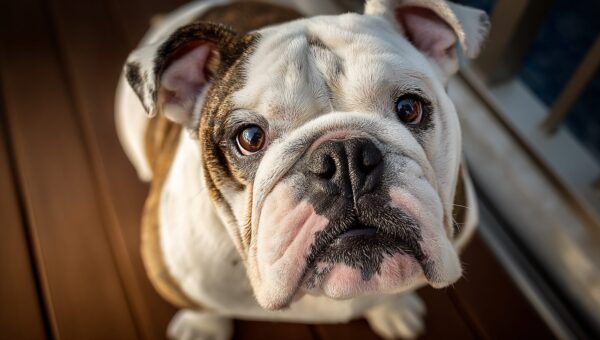
- Brachycephalic — highest risk. French bulldogs, English bulldogs, pugs, Boston terriers, boxers, Cavalier King Charles spaniels. Their soft palate and narrowed airways make panting inefficient. UK studies have documented French bulldogs at over 14× the heatstroke risk of mesaticephalic breeds.
- Double-coated arctic breeds — high risk. Huskies, malamutes, Samoyeds, Bernese mountain dogs, great Pyrenees. The undercoat is insulation working against them in humid heat.
- Giant and large breeds. Mastiffs, Saint Bernards, Newfoundlands. Body mass holds heat; cooling surface area is proportionally smaller.
- Seniors (over 8) and puppies (under 6 months). Both have less efficient thermoregulation.
- Overweight dogs of any breed. Insulating fat plus cardiac strain.
- Dogs with laryngeal paralysis, collapsed trachea, or heart disease. Pre-existing airway or circulatory compromise.
If you own a brachycephalic dog, the practical truth is that you cannot manage heat the same way as someone with a healthy Labrador. Many French bulldog owners shift entirely to dawn walks, treadmill exercise indoors, and air-conditioned daycare from June through September. That is not over-cautious — it is correct for the breed.
Cooling Methods That Actually Work
The short answer: Evidence-supported cooling methods are shade, fresh water access, evaporative cooling vests, frozen treats, fan-plus-wet-towel setups, and AC. Cooling pads with phase-change gel work for some dogs. “Cooling beds” filled with water or air are mostly marketing.
Shade and Air Movement
The simplest interventions are the most effective. A dog in deep shade with airflow loses heat far faster than a dog in still partial shade. A box fan aimed at the dog’s resting spot, paired with a damp towel they can lie on, is an evaporative cooler — the same principle as a swamp cooler. Cheap, effective, and works for any size dog.
Cooling Vests
Evaporative-cooling vests (Ruffwear Swamp Cooler, Hurtta Cooling Vest, Kurgo Core Cooling Vest) are soaked in water, wrung out, and worn — water evaporating off the vest pulls heat from the dog’s skin. They work best in dry heat (above 80°F, below 50 percent humidity). In humid air they are far less effective. About $40 to $80; reapply water every 1 to 2 hours.
Frozen Treats and Lick Mats
Frozen Kongs filled with plain yogurt, pumpkin puree, or low-sodium broth are calorie-controlled cooling activities. Lick mats spread frozen treats over a textured surface — the licking itself is calming. Avoid freezer-burn-prone fillings like fresh fruit chunks (choking hazard once frozen solid).
Cooling Pads
Self-cooling pressure-activated gel pads (The Green Pet Shop, K&H Coolin’) work for some dogs through phase-change material. They cool for 3 to 4 hours then need 15 to 20 minutes off the dog to reset. Many dogs avoid them — be honest about whether yours actually uses it.
Pools and Sprinklers
A hard-sided plastic kiddie pool ($25) in shade with 4 inches of water is the single best $25 you can spend for a water-loving dog. Cool feet = cooled core via paw-pad heat exchange. Sprinklers work for active dogs but skip them if your dog is anxious about water spray.
The Ice-Water Debate (and What ER Vets Actually Do)
The short answer: The old advice not to use cold water on a heatstroking dog has been revised. Current emergency veterinary consensus is that cool-to-cold water (50–60°F) applied to the body is safe and effective in active heatstroke. The concern about “shock from too-cold water” was overstated. Avoid wrapping a dog in towels (traps heat) and avoid prolonged ice baths (can lower core too far).
This is one of the most common dog-care myths still in circulation. For decades, the advice was “lukewarm water only — cold water causes vasoconstriction and traps heat.” More recent emergency veterinary literature, summarized by groups like the Merck Veterinary Manual and reflected in current ER protocols, has reversed that.
The evidence: cold-water immersion brings core temperature down faster than lukewarm water, and faster cooling correlates with better survival. The shift in vet medicine has been toward “cool fast, cool now.”
Practical first-aid protocol for suspected heatstroke (rectal temperature over 104°F or any of the warning signs below):
- Move to shade immediately.
- Wet the dog all over with cool tap water — garden hose is fine. Focus on belly, armpits, groin, and paw pads where blood vessels are close to the surface.
- Run a fan over the wet dog if available — evaporation accelerates cooling.
- Offer small sips of cool water if the dog is alert. Do not force water on a dog that is collapsed or seizing.
- Stop active cooling once rectal temperature reaches 103°F — overshooting into hypothermia is a real risk.
- Get to an emergency vet immediately, even if the dog seems to recover. Heatstroke causes delayed organ damage that may not appear for 24 to 72 hours.
Heatstroke Warning Signs (and the ER Threshold)
The short answer: Excessive panting, thick or stringy drool, brick-red or pale gums, vomiting, diarrhea, weakness, ataxia (drunken walk), and collapse are all heatstroke signs. Rectal temperature over 104°F is heat exhaustion; over 106°F is heatstroke and a true emergency. Get to an ER even after first aid — internal damage often presents 24+ hours later.
The progression from heat stress to heatstroke is faster than most owners expect — sometimes 15 to 30 minutes in a high-risk dog. The clinical staging veterinarians use:
- Heat stress (rectal temp 102.5–104°F): Excessive panting, seeking shade, slight slowing. Stop activity, move to shade, offer water, monitor.
- Heat exhaustion (104–106°F): Heavy panting, thick drool, bright red gums, mild ataxia, refusing to move. Active cooling required; vet visit recommended.
- Heatstroke (over 106°F): Collapse, vomiting, diarrhea (sometimes bloody), seizures, mental dullness, gums turning pale or muddy. True emergency. Cool immediately and transport to ER.
How to take a dog’s rectal temperature in the field: use a digital thermometer (drugstore baby thermometer is fine) lubricated with petroleum jelly, insert about 1 inch, hold for the reading. Normal canine temperature is 100.5–102.5°F. Above 104°F, treat as emergency. We discuss other field assessment skills in our dehydration guide, which often overlaps with heat illness.
Gum color is the quickest visual triage. Healthy gums are bubblegum pink. Brick red gums signal severe heat dilation; pale or muddy-blue gums signal shock. Capillary refill time longer than 2 seconds is also a shock sign — press a finger on the gum, release, and time the color return.
Daily Hot-Weather Routine for At-Risk Dogs
The short answer: For high-risk breeds in summer, restructure the day around dawn walks, indoor activity at midday, AC at night, frozen enrichment activities, and continuous fresh water access. Skip midday walks entirely above 80°F regardless of breed.
A practical summer day for a brachycephalic or senior dog:
- 5:30–6:30 am: Main walk. Shaded route or grass; avoid pavement.
- Mid-morning: Frozen Kong or lick mat in air-conditioned space.
- Midday (11 am–4 pm): Indoors with AC or fan + wet towel. Mental stimulation only — puzzle feeders, snuffle mats, training games. See our indoor training options.
- Late afternoon (after 6 pm): Backyard pool, sprinkler, short shaded walk. Test pavement first.
- Bedtime: AC on at 72°F or cooler. Cooling mat available.
Always have water available. Add 1 to 2 extra water stations in summer; many dogs drink less than they need from a single bowl. Elevated raised water bowls keep water cooler. Pet drinking fountains can encourage drinking in dogs who prefer running water.
The Single Highest-Risk Situation: Cars
The short answer: A car parked in 70°F weather hits 90°F in 10 minutes and 110°F in 30 minutes — even with windows cracked. Never leave a dog in a parked car in any season above 60°F, even briefly. This kills hundreds of dogs in the US every year.
Cracked windows do not meaningfully reduce interior temperatures. Studies cited by the AVMA have shown that interior temperatures rise at almost the same rate whether windows are cracked or fully closed. White and light-colored cars heat slightly slower than dark cars, but not enough to matter for safety.
If you see a dog locked in a hot car, in most US states you can call 911 or animal control. Some states have “Good Samaritan” laws that protect citizens who break a window to rescue a distressed animal — check your state’s statute before acting. Document with photos and timestamps.
Frequently Asked Questions
Should I shave my long-haired dog in summer?
For most double-coated breeds, no. The undercoat insulates against heat as well as cold, and shaving exposes skin to sunburn and damages the coat texture. Brush out the undercoat regularly (a Furminator-style undercoat tool works) instead of clipping. Single-coated breeds (poodles, Yorkies) can be safely trimmed shorter.
Is it safe to give my dog ice cubes?
Yes, in moderation. The old myth that ice cubes cause bloat in dogs is not supported by evidence. Limit to a few cubes at a time for small dogs to avoid dental damage from aggressive crunching. Frozen broth or yogurt cubes are a better option than plain ice for most dogs.
How much water does a dog need in summer?
Roughly 1 ounce per pound of body weight per day in normal weather, and 1.5–2 ounces per pound in hot weather or with heavy exercise. A 50-lb dog needs 50–100 oz on a hot day. Refill bowls multiple times — warm water is unappealing.
Can I exercise my dog if I keep them hydrated?
Hydration helps but does not override heat-index limits. Above an 85°F heat index, healthy dogs should exercise lightly only at dawn or dusk. Above 95°F, indoor activity only regardless of hydration.
What’s the best emergency cooling method on a hike?
Cool stream or lake water if available — wet the belly, armpits, and paw pads, then keep the dog in shade. A collapsible water bowl, an extra liter of drinking water for the dog, and a small spray bottle should be in any summer hiking pack. Turn back well before the hottest part of the day.
My dog had heatstroke last summer — are they more vulnerable now?
Yes. Dogs that have had a heatstroke episode have permanently elevated risk for future episodes — likely from subtle organ damage. Treat them as a high-risk dog from then on, regardless of breed. Mention the prior episode at every vet visit.