Dog ear infections are one of the most common reasons for non-emergency vet visits in the US — and one of the most over-treated at home. Mild, early, first-time inflammation may resolve with proper cleaning and time. Anything more advanced — true bacterial otitis, yeast overgrowth, or a ruptured eardrum — needs prescription medication delivered by your vet, not whatever’s in the medicine cabinet.
This guide walks through what you can responsibly do at home, what you should never put in your dog’s ear, the underlying causes that drive recurrent infections (allergies are the headline driver, not “dirty ears”), and the red flags that mean stop and book an exam. The framing follows guidance from the American Kennel Club’s health resources on ear infections and the Merck Veterinary Manual dog-owner ear-disorder section.
When At-Home Care Is Reasonable
Quick answer: Home cleaning is reasonable only for mild, first-time, early-stage ear inflammation: a little pink in the canal, a small amount of brown wax, mild head-shaking, and no pain on touch. The dog is otherwise normal — eating, playing, no fever, no head tilt. If any of those conditions don’t hold, skip the home protocol and call your vet.
The decision tree, in plain English:
- Try home cleaning if you see mild redness or a little waxy buildup, the dog will let you handle the ear without flinching, there’s no smell beyond mild “warm dog”, and you’ve never treated this dog for an ear infection before.
- Skip home care and go to the vet if there’s pus, blood, a sour or sweet smell, severe redness, a head tilt, your dog is in pain on touch, or this is a repeat issue. Recurrent infection often means an underlying allergy that home cleaning won’t fix.
For floppy-eared breeds — Cocker Spaniels, Basset Hounds, Cavaliers, Labs after swimming — preventive cleaning every 1–2 weeks is reasonable maintenance, not “treatment.” A wellness exam at your annual vet visit ($65–$120) is the right time to learn the technique on your specific dog. Our step-by-step dog ear cleaning guide covers the maintenance routine in detail.
The Right Way to Clean a Dog’s Ears at Home
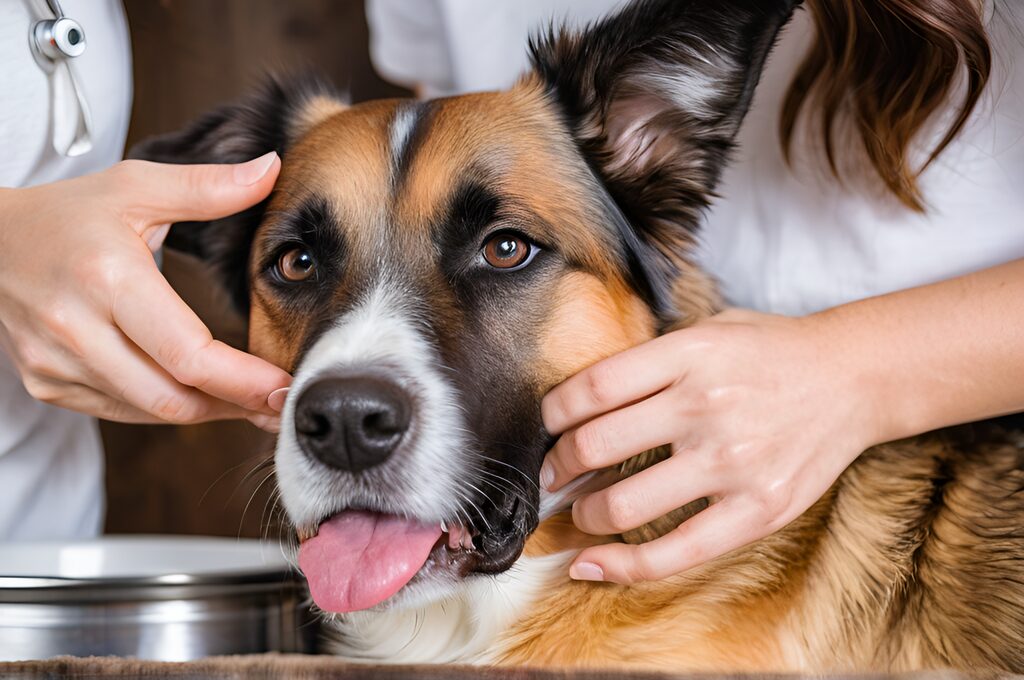
Quick answer: Use a vet-formulated ear cleaner (saline-based, with mild ceruminolytics like salicylic acid), fill the canal, massage the base of the ear for 20–30 seconds until you hear a soft squelch, let the dog shake, and wipe the visible parts only with cotton balls or gauze. Never push anything — Q-tips, syringes, fingers — into the ear canal itself.
Step by step:
- Pick a vet-grade cleaner. Brands like Epi-Otic Advanced, TrizULTRA + Keto, or Zymox Ear Cleanser run $14–$28 a bottle and last most dogs over a year. They’re formulated to break up wax and lower the canal’s pH against yeast.
- Warm the bottle in your hand before applying. Cold liquid in the canal triggers a violent shake response.
- Lift the ear flap straight up to expose the L-shaped canal, then squirt enough cleaner to fill the visible portion (1–3 mL depending on the size of dog).
- Massage the cartilage at the base of the ear for 20–30 seconds. The squelching sound is the cleaner working through the canal.
- Step back and let your dog shake — most of the dislodged debris will come up to the visible part of the ear.
- Wipe the outer ear and the visible canal entrance with cotton balls or gauze. Stop where you can see — never push into the canal itself.
Cleaning frequency: floppy-eared dogs that swim, weekly. Floppy-eared dogs that don’t swim, every 2 weeks. Erect-eared dogs (Huskies, German Shepherds), only when you see visible buildup. Over-cleaning strips the canal’s protective microbiome and is a setup for the very problem you’re trying to prevent.
What Not to Put in a Dog’s Ear
Quick answer: No hydrogen peroxide, no rubbing alcohol, no apple cider vinegar, no essential oils, no human ear drops, no garlic oil, no coconut oil, no over-the-counter mite drops without a confirmed diagnosis, and no leftover prescription drops from a previous infection. These either burn inflamed tissue, leave water behind that feeds yeast, or contain ingredients toxic to dogs.
Why each one is wrong:
- Hydrogen peroxide: oxidizes inflamed tissue, can damage the eardrum, and the foaming action is bubbles, not cleaning. The ASPCA’s dog-care guidance warns against routine peroxide use.
- Rubbing alcohol: stings on inflamed skin, dries out the canal, and triggers shaking violent enough to cause aural hematomas (the ear flap fills with blood and needs surgical drainage).
- Apple cider vinegar: the home-remedy darling — and a bad idea on inflamed tissue. Acidic, painful, and the residual moisture feeds yeast.
- Essential oils: tea tree, eucalyptus, pennyroyal, wintergreen — toxic to dogs even diluted. Never apply topically to broken or inflamed skin.
- Coconut oil and garlic oil: coconut oil traps moisture and can worsen yeast; garlic in any form is a known canine toxin (Allium family).
- Leftover prescription drops: using leftover Otomax or Mometamax from a previous infection assumes the same organism is at play. It probably isn’t, and the wrong antibiotic worsens resistance patterns.
If you’ve already tried one of the above and your dog is now scratching, shaking, or yelping, stop, do not “rinse it out” with more product, and book a same-day vet exam. Same-day visits typically run $80–$150; an after-hours ER visit runs $200–$500.
Why Recurrent Ear Infections Aren’t About the Ears
Quick answer: The American College of Veterinary Dermatology has documented that the great majority of recurrent canine ear infections are downstream of underlying disease — environmental allergies (atopic dermatitis), food allergies, and ear-canal anatomy in floppy-eared breeds. Treating only the ear infection without addressing the cause means it will be back within weeks to months.
The hierarchy of underlying causes, most common first:
- Atopic dermatitis (environmental allergies): dust mites, pollens, mold. Often seasonal at first, year-round later. Often paired with itchy paws, belly rashes, and chronic licking.
- Food allergies: typically beef, chicken, dairy, or wheat protein. Less common than environmental allergies but more common than commonly assumed. An 8-week elimination diet trial is the diagnostic standard.
- Anatomy: heavy floppy ears (Cockers, Bassets), narrow canals (Shar-Peis, Bulldogs), excess hair (Poodles, Schnauzers).
- Hormonal disease: hypothyroidism in middle-aged dogs, Cushing’s disease in seniors. Both can present as recurrent skin and ear infections.
- Foreign bodies: grass awns, foxtails, debris from a swim. Common after summer hikes — and one-shot causes, not recurrence drivers.
If your dog is on his third or fourth ear infection in a year, ask your vet about a referral to a veterinary dermatologist. An initial dermatology consult runs $250–$500; serum allergy panels add $300–$600; intradermal testing $400–$700. The math sounds steep until you total up the cost of repeat infection treatments. Many recurrent cases stabilize on monthly Cytopoint injections (~$70–$120/month) or daily Apoquel ($60–$120/month). For dietary causes, see our note on novel-protein diets.
OTC Options: What’s Actually Useful and What’s Marketing
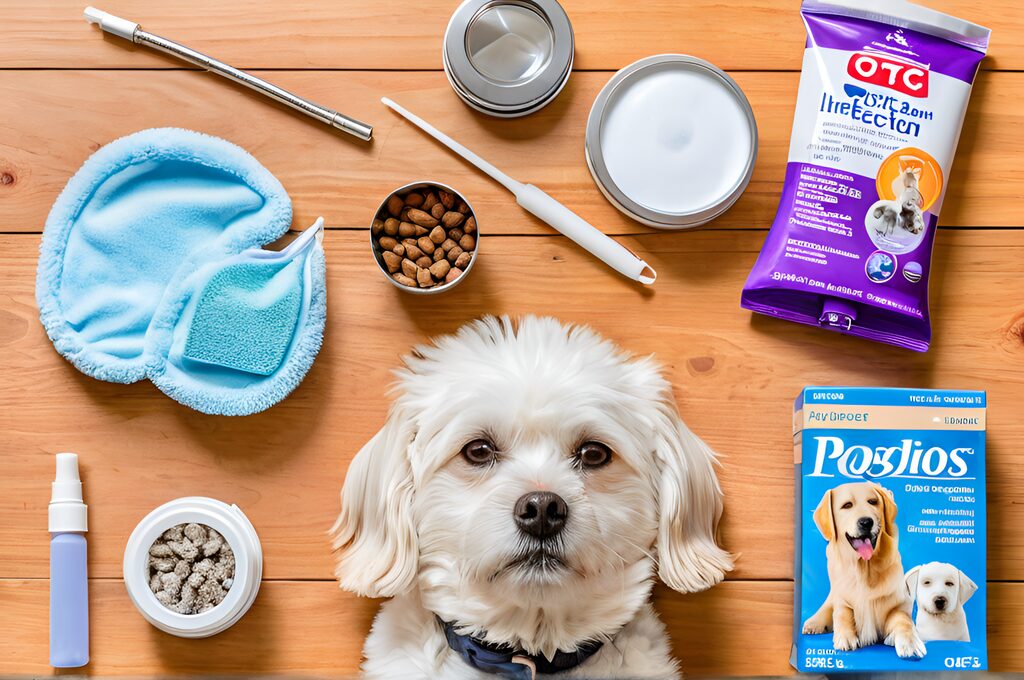
Quick answer: Useful OTC options are vet-formulated ear cleaners and Zymox-style enzymatic products marketed for mild yeast and bacteria. Useless or harmful: anything labeled as a “cure” for ear infections, alcohol-based “ear drying” products on inflamed ears, and most homeopathic ear drops. None of these substitute for a real diagnosis when an infection is active.
Worth your money:
- Vet-formulated cleaners (Epi-Otic, Virbac, Douxo) — $15–$25, useful for maintenance and mild buildup.
- Zymox Otic Enzymatic Solution ($25–$35) — peer-reviewed efficacy against mild bacterial and yeast infections in early studies; reasonable to try for 7 days on a mild, first-time issue with no pain. Stop and see a vet if no improvement in a week.
- Drying agents post-swim (TrizULTRA without antibiotics) — appropriate for water-loving dogs, used preventively, not on already-infected ears.
Skip:
- Any product claiming to “cure” ear infections without veterinary input.
- Alcohol-based products on red, inflamed ears.
- “Ear mite” drops without a confirmed diagnosis — most “mite” infections in adult dogs are actually yeast.
- Homeopathic dilutions; there is no evidence of efficacy for active infections.
Red Flags That Mean Stop and Call the Vet
Quick answer: Pain on touch, head tilt, loss of balance, sudden hearing changes, swelling of the ear flap, persistent head shaking, blood from the canal, or any of the above failing to improve within 48 hours of starting home care are all reasons to stop and book an exam. Several of these can indicate a ruptured eardrum or middle-ear involvement that needs a different treatment approach entirely.
A persistent head tilt in particular is never normal — it can be vestibular disease, middle-ear infection, or a polyp. Aural hematomas (the ear flap suddenly swelling like a balloon) almost always require surgical drainage. Trying to manage either at home means a permanent cosmetic change to the ear plus a longer recovery.
If your dog is showing any of the broader signs of pain — see our walk-through of canine GI signals for the related “something’s wrong” red flags — combine that context with the ear exam findings before deciding on home care.
Frequently Asked Questions
Can a dog ear infection clear up on its own?
Mild, very early inflammation in a healthy dog can resolve with cleaning and time. Established bacterial or yeast infections do not — they progress, the dog’s pain increases, and the eardrum can rupture. If symptoms haven’t started improving in 5–7 days of home cleaning, stop and book a vet visit.
How much does a vet visit for an ear infection cost?
A typical first-time ear-infection visit runs $90–$200: exam ($65–$120), ear cytology to identify yeast vs. bacteria ($25–$60), and prescription drops ($25–$80). Recurrent or complicated cases requiring sedation for deep cleaning or culture and sensitivity testing run $250–$600.
Is plucking ear hair good or bad?
Controversial — and the consensus has shifted. Routine plucking in dogs without infections is generally not recommended; it irritates the canal lining and creates micro-abrasions. For breeds with chronic ear hair issues (Poodles, Schnauzers, Cocker Spaniels), discuss with your vet whether plucking helps that individual dog or makes infections more frequent.
Can I use prescription drops left over from my last dog?
No. Many ear medications expire 6–12 months after opening, the bacteria or yeast in the new infection may be different, and partial-course antibiotic use drives resistance. Throw old drops out and get a fresh diagnosis.
How can I prevent ear infections in a swimmer?
Dry the ears after every swim with a soft towel and a vet-formulated ear-drying solution. For dogs with chronic post-swim infections, ask your vet about a custom rinse protocol. Keeping ear hair trimmed, not plucked, also helps. See our dog ear cleaning routine for the maintenance setup.
My dog had an ear infection 6 months ago and now it’s back. Same treatment?
No. Recurrence is a sign of an underlying driver — usually an allergy. Repeating the same antibiotic course over and over without addressing the cause selects for resistant organisms and stretches out the time to resolution. Ask your vet about cytology, allergy workup, or a dermatology referral.