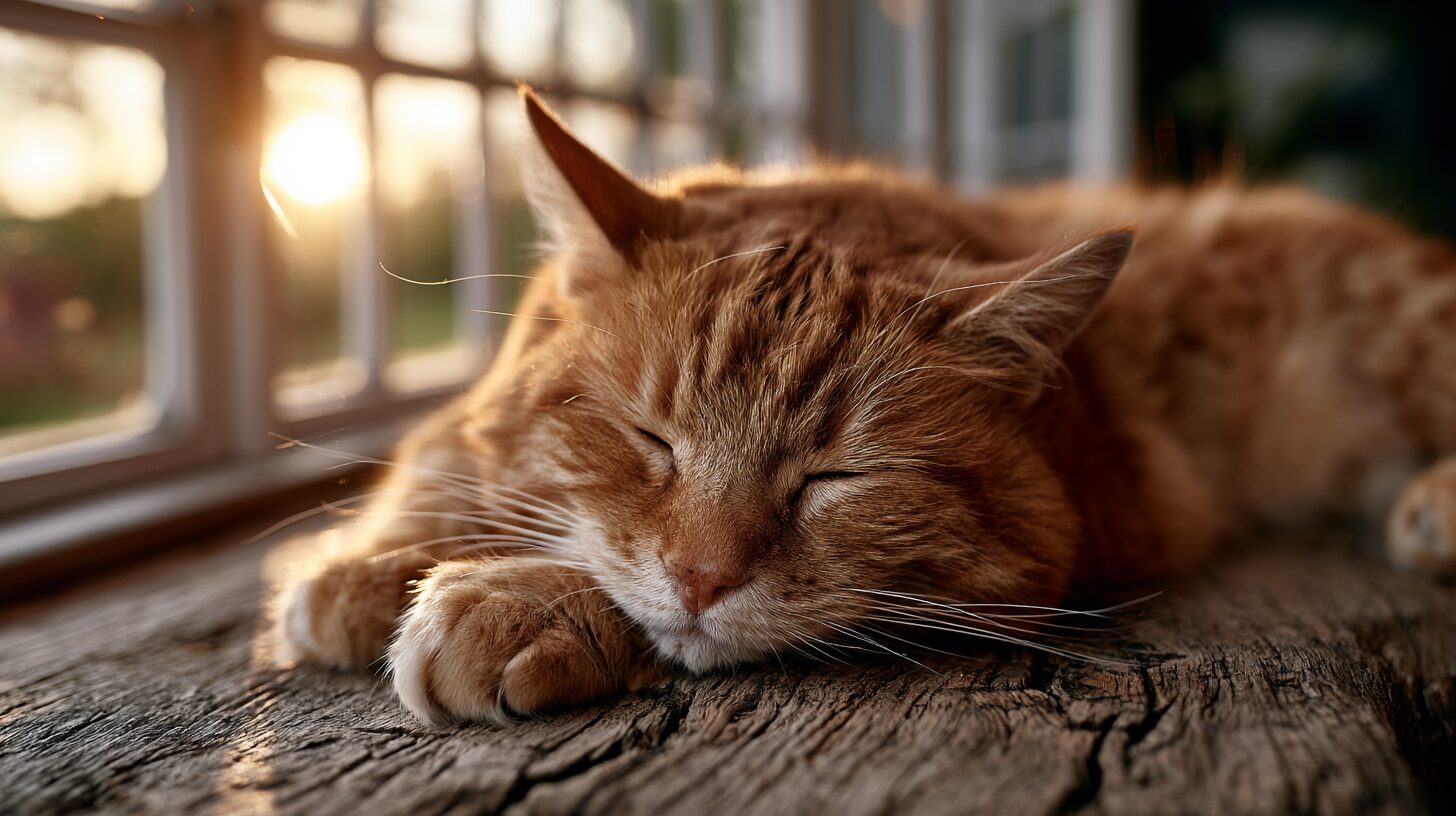
A cat who skips the litter box for a day, then strains and produces a single dry, bullet-shaped stool, is mildly constipated. A cat who hasn’t passed stool in 72 hours, is straining repeatedly, vomiting, or hiding under the bed is in obstipation territory — and obstipation is a vet emergency, not a home-remedy puzzle. Knowing the line between those two states is the most useful thing any cat owner can learn about feline elimination.
This guide covers the home remedies that actually work for mild, occasional constipation — pumpkin, hydration, lubricants, and movement — what doses are safe, what to never give a cat, and the precise red flags that mean it’s time to put the syringe down and pick up the phone. It draws on the Merck Veterinary Manual’s constipation chapter and current AAFP feline-specific guidance.
Mild vs. urgent: the 24-hour rule
Most healthy cats produce one to two stools daily. A cat who skips a day occasionally — especially after a stressful event, a litter change, or a bout of mild dehydration — usually self-corrects within 24–48 hours with a little help. The threshold to stop home care is straightforward: more than 72 hours without stool, more than 24 hours of active straining without producing anything, vomiting, lethargy, or any sign of pain.
Recurrent constipation is also its own warning. A cat who needs a “remedy” more than once a month likely has an underlying driver — chronic kidney disease, pelvic injury, megacolon, or simply low water intake — and that’s worth a vet workup before the next episode escalates. The AAFP-aligned Cat Friendly Practice guidance puts it bluntly: a cat constipated more than three times in three months is no longer “occasional.”
If your cat is also drinking unusually large amounts of water — or you can’t tell — run our at-home hydration check (the skin-tent and capillary-refill techniques work the same way on cats). Chronic mild dehydration is the single most common upstream cause of feline constipation.
The four home remedies that are safe to try
For genuinely mild cases, these are the interventions general-practice feline vets routinely suggest before any prescription. None requires a trip to the clinic, but every one of them has a dose ceiling.
1. Plain canned pumpkin (1 teaspoon, once or twice daily)
100% pure pumpkin purée — never pumpkin pie filling, which contains xylitol-adjacent sweeteners and spices — adds soluble fiber that pulls water into the stool. The standard cat dose is 1 teaspoon mixed into wet food, once or twice a day, for no more than 5–7 days. Some cats refuse pumpkin outright; if yours does, don’t fight it, the next remedy is more important anyway.
2. Aggressive hydration (the single most useful step)
Most constipated cats are subtly dehydrated. The fix is boring and works: switch from dry-only to majority wet food, add a tablespoon of unsalted bone broth or tuna juice (water-packed, no salt) to the meal, and put a second water source in a different room. Pet water fountains genuinely increase intake — multiple ASPCA-cited household surveys suggest fountains roughly double daily intake versus a still bowl in many cats. If you’ve been on the fence about wet vs. dry, our piece on wet vs. dry cat food covers the moisture math in detail.
3. A short course of a hairball lubricant (e.g., Laxatone)
Petroleum-based hairball pastes coat stool and ease passage. Use them only short-term — three to five days max — because long-term use interferes with fat-soluble vitamin absorption. A pea-sized dab on the paw twice daily is the standard dose for an adult cat. Skip this remedy entirely in kittens under six months.
4. Movement, play, and an extra litter box
Gut motility is partly mechanical. A 10-minute wand-toy session twice a day, particularly in the morning, kicks peristalsis forward in many cats. While you’re at it, add a second litter box on a different floor or room — the rule of thumb is one box per cat, plus one. Some cats stop using a single box that’s slightly soiled, hold stool, and constipate themselves.
Things you should never give a constipated cat
The internet is full of bad ideas here. A short list of the ones to avoid:
- Mineral oil by mouth. Tasteless and odorless means cats won’t pull back — and aspirated mineral oil causes lipid pneumonia, which is sometimes fatal. Lubricants belong on the paw or in food, not down a syringe.
- Olive oil or “natural” laxatives in large doses. A teaspoon of olive oil isn’t going to fix anything and can trigger pancreatitis in sensitive cats.
- Human laxatives without explicit vet direction. Miralax (PEG 3350) is sometimes used in cats, but the dose is small (¼ teaspoon up to twice daily for an average adult cat) and the decision belongs to your vet — especially if your cat has any kidney disease history. Our breakdown of renal-friendly wet foods goes deeper on that overlap.
- Enemas at home. Phosphate-containing enemas (Fleet brand) are toxic to cats and have caused fatal electrolyte derangements. Enemas in cats are a vet-only procedure.
- Hairball lubricants long-term. Useful for a week, problematic for a month.
Red flags: when to stop home care and call the vet
Any one of these means home remedies are over and the next step is a phone call to your clinic — same day, ideally within a few hours.
Straining for more than 24 hours without producing stool. This is sometimes confused with urinary blockage, which is its own emergency. If you can’t tell whether your cat is straining to urinate or defecate, treat it as a urinary obstruction and go now — male cats with a fully blocked urethra can die within 24–48 hours.
Vomiting alongside constipation. Constipation rarely causes vomiting on its own; vomiting plus straining can mean an obstruction or megacolon decompensation. Don’t wait this one out.
72 hours without any stool. Even if your cat seems otherwise fine, three full days is the threshold most feline practitioners use to recommend imaging. Megacolon — a permanent dilation of the colon that can no longer contract effectively — is a real diagnosis in cats and gets harder to manage the longer it goes untreated.
Pain on belly palpation, hiding, or refusing to eat. Cats hide pain so hard that the moment they show it, things have usually been brewing for a while. The Feline Grimace Scale is one good way to read pain quickly; we cover it in signs your cat is in pain.
Blood in stool or around the anus. A streak of red on hard stool can be from straining alone, but bright blood pooling, dark tarry stool, or any rectal mass needs a same-day exam.
Long-term prevention that actually moves the needle
Once your cat is back to normal, three changes prevent most repeat episodes. None of them are dramatic, but cats are creatures of small habits.
Move toward majority wet food. A 70/30 wet-to-dry ratio is a sensible target for most adult cats, and it doubles or triples daily moisture intake versus a dry-only diet. If cost or convenience is the blocker, even adding a single 3-oz wet pouch a day on top of dry kibble makes a measurable difference.
Address the litter box environment. The “n+1” rule (one box per cat plus one) is real. So is depth (1.5–2 inches of unscented clumping litter), location (low-traffic, two exits if possible), and cleanliness (scooped twice daily). Cats who hold stool because the box is unpleasant are setting up for the next episode.
Manage weight. Overweight cats are over-represented in chronic constipation cases — abdominal fat reduces effective abdominal pressure during defecation, and obesity worsens insulin resistance and inflammation. A target body condition score of 4–5/9 is the goal; your vet’s clinic almost certainly has a body-condition wall chart that takes 30 seconds to interpret.
Frequently asked questions
How much pumpkin can I give my cat per day?
One teaspoon of plain canned pumpkin (Libby’s-style 100% pumpkin, not pie filling) once or twice a day for an average 10-lb adult cat. Stop after a week even if it’s working, because long-term high-fiber loading without addressing the root cause masks the underlying problem. Kittens under four months should not get pumpkin without vet input.
Is Miralax (PEG 3350) safe for cats?
It can be, in vet-directed doses — typically ¼ teaspoon mixed into wet food, once or twice daily for short-term use. It’s an osmotic laxative that pulls water into the colon. Because it’s increasingly used as a first-line agent for chronic feline constipation, it’s worth a phone call to your clinic rather than self-prescribing.
How long can a cat go without pooping before it’s an emergency?
Healthy cats typically poop daily; 48 hours without stool is “monitor closely,” and 72 hours plus any other sign (straining, vomiting, lethargy, hiding) is a same-day vet visit. After 96 hours, even a previously well-acting cat needs imaging — fecal impaction can become megacolon if left.
Can stress cause constipation in cats?
Yes. New houseguests, a moved litter box, a new pet, or even a renovation next door can suppress elimination for 24–48 hours. Stress-driven constipation usually resolves once the stressor passes; if it persists past three days, treat it like any other constipation case.
What’s megacolon and how is it different from regular constipation?
Megacolon is a permanent enlargement of the colon, often caused by long-standing constipation or pelvic injury, where the colon wall stretches and loses contractile function. Diagnosis requires X-rays. Treatment is lifelong — typically a combination of stool softeners, prokinetic drugs (cisapride), and a low-residue diet — with subtotal colectomy as a surgical option for severe cases. The earlier chronic constipation is addressed, the lower the risk of progression.
Does dry food cause constipation in cats?
Not directly, but exclusively dry-fed cats are more likely to be subtly dehydrated, which is one of the strongest predictors of constipation. Cats fed only dry food consume meaningfully less total water than cats on majority wet diets, and that gap is the mechanism most often blamed for hard stool.